

Genie 4 vs Genie 3, side by side
The same dressing-room scene generated by both models. The comparison is the single clearest measure of what one year changed.
Source: Google DeepMind, Genie 4 announcement
Genie 4 is Google DeepMind's real-time, natively multimodal world model, announced on October 27, 2026.
This is an independent guide to what it does, how it differs from Genie 3, and how to actually use it.
Independent guide · not affiliated with Google. Every factual claim is linked to the official DeepMind announcement.
Genie 4 is a world model, not a video generator. Instead of rendering a fixed clip, it builds a playable environment you can steer in real time with plain language — complete with physics, ambient audio, and characters that answer you.
Google has not published frame rate, output resolution, model size, or pricing for Genie 4. Any exact number you see elsewhere is unverified.
These are real demo clips published by Google DeepMind alongside the Genie 4 announcement — not illustrations. Every card plays the original footage.
The same dressing-room scene generated by both models. The comparison is the single clearest measure of what one year changed.
Source: Google DeepMind, Genie 4 announcement
A typed prompt — "wind blows on silk" — drives a pink ribbon across a meadow. The reasoning panel on the right shows the agent resolving the rule.
Source: Google DeepMind, Genie 4 announcement
A heavy object is dropped onto a soft one. A direct look at contact physics and how far the simulation will follow the consequence.
Source: Google DeepMind, Genie 4 announcement
Macro-scale detail: a seed among blades of grass, with light and occlusion at a scale that usually breaks generated worlds.
Source: Google DeepMind, Genie 4 announcement
A wand, a cat and a wooden chest in an interior. Interesting for what the model keeps consistent as the viewpoint moves.
Source: Google DeepMind, Genie 4 announcement
A character performs on a shoreline. Genie 4 generates audio with the scene, so this is one of the clips where sound matters as much as picture.
Source: Google DeepMind, Genie 4 announcement
From the opening film. The official caption notes results are illustrative and sequences shortened — worth remembering when judging fidelity.
Source: Google DeepMind, Genie 4 announcement
A robotic arm moves a pipette over a well plate while the reasoning panel plans the next step. This is the agent-training use case made concrete.
Source: Google DeepMind, Genie 4 announcement
The short loop DeepMind used at the top of the announcement post — a compact look at how the world holds together frame to frame.
Source: Google DeepMind, Genie 4 announcement
Clips are the original files published by Google DeepMind, re-hosted for reliability. genie4.art is not affiliated with Google; all rights remain with the original publisher. Some clips carry DeepMind's own caption that sequences were shortened for illustration.
Genie 3 introduced real-time interaction in 2025. Genie 4 extends it from a single generated scene into a multimodal, agent-driven simulation.
| Dimension | Genie 4 | Genie 3 |
|---|---|---|
| Release | October 27, 2026 | August 5, 2025 |
| Modality | Natively multimodal: visuals, ambient audio, music, live dialogue | Visual frames with promptable world events |
| Reasoning layer | Gemini Omni grounding plus a Gemini 3.8 Flash agent loop that observes, plans, and replans | Not described as agent-driven |
| Interaction | Real-time natural-language steering of weather, camera, objects and people | Real-time navigation plus text-triggered world events |
| Audio | Native ambience plus interactive character dialogue | No native audio generation described |
| Consistency | Longer coherent sessions, though Google still reports drift over long runs | Largely consistent for several minutes; visual memory around one minute |
| Access | Trusted testers, AI Ultra via Project Genie, Gemini API and AI Studio partners | Limited research preview for a small cohort of academics and creators |
Model specs Google has not published — frame rate, resolution, session length — are deliberately left blank rather than estimated.
Scroll the table sideways to see all columns.
DeepMind describes Genie 4 as a Gemini-based system rather than a single monolithic model. Understanding the split explains both its strengths and its failure modes.
Gemini Omni anchors the generated world in real-world appearance and behaviour, so scenes read as places rather than texture.
Gemini 3.8 Flash runs a real-time loop: observe the frame, split the goal into steps, check whether it worked, replan when you intervene.
The world is recomputed continuously, so your input changes the scene instead of sitting in a queue behind a fixed render.
These are the areas DeepMind highlights in the announcement — and the ones that separate a world model from a text-to-video tool.
Change weather, reposition the camera, drop in a new object or person. Gemini rewrites the prompt to fit context and keeps the scene running between edits.
Aerodynamics, collisions, and natural character movement with reactions — the parts that make an environment feel solid.
Setting-appropriate ambience plus interactive character dialogue that adapts live, generated with the scene rather than dubbed over it.
Multi-step reasoning through Gemini to model causality and procedural behaviour — the basis for robotics and agent training.
Every generated frame and audio track carries an imperceptible watermark, so provenance survives re-encoding.
Inject scripted moments into a live session — a storm rolls in, a door opens, a crowd arrives — without cutting away.
DeepMind names the following workflows, drawing on what trusted testers reported during the research preview.
Testers describe a "draft mode" for scenes: block a shot in a live generated set, try a take, and iterate before committing budget to a physical build.
Explore whether a level layout, camera behaviour, or mechanic feels right while it is still an idea — before writing engine code or building assets.
Generate environments with causal, multi-step events so embodied agents and robots can practise rare scenarios without hardware or a physical set.
Testers turned 2D historical photographs into immersive simulations — a way to walk through a documented moment instead of looking at a still.
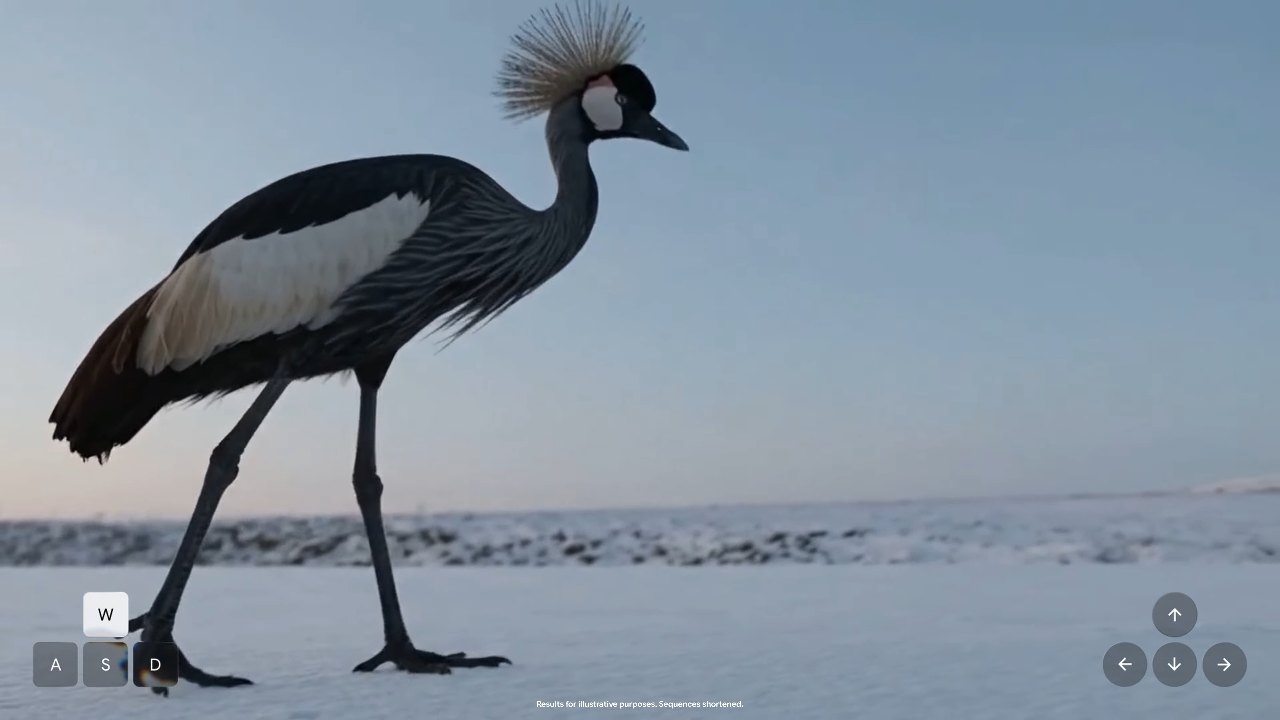
Stills lifted directly from the clips above — genuine Genie 4 output, not illustration. Open any frame full size, or watch the source clip in the gallery above.
Access is staged. Here is what DeepMind has confirmed, and what is still unknown.
The questions people actually search for, with answers drawn from the official announcement.
More questions answered on the full FAQ page.
Draft the scene here, then take it to a generator that can actually run it.
No account needed on this site — it is a guide, not a service.